How Indian Brands Are Expanding Into Southeast Asian Marketplaces
Southeast Asia has become the natural next market for India's fastest-growing consumer brands. Here's why it's happening, what actually makes it hard, and how to enter without building a local operation from scratch.
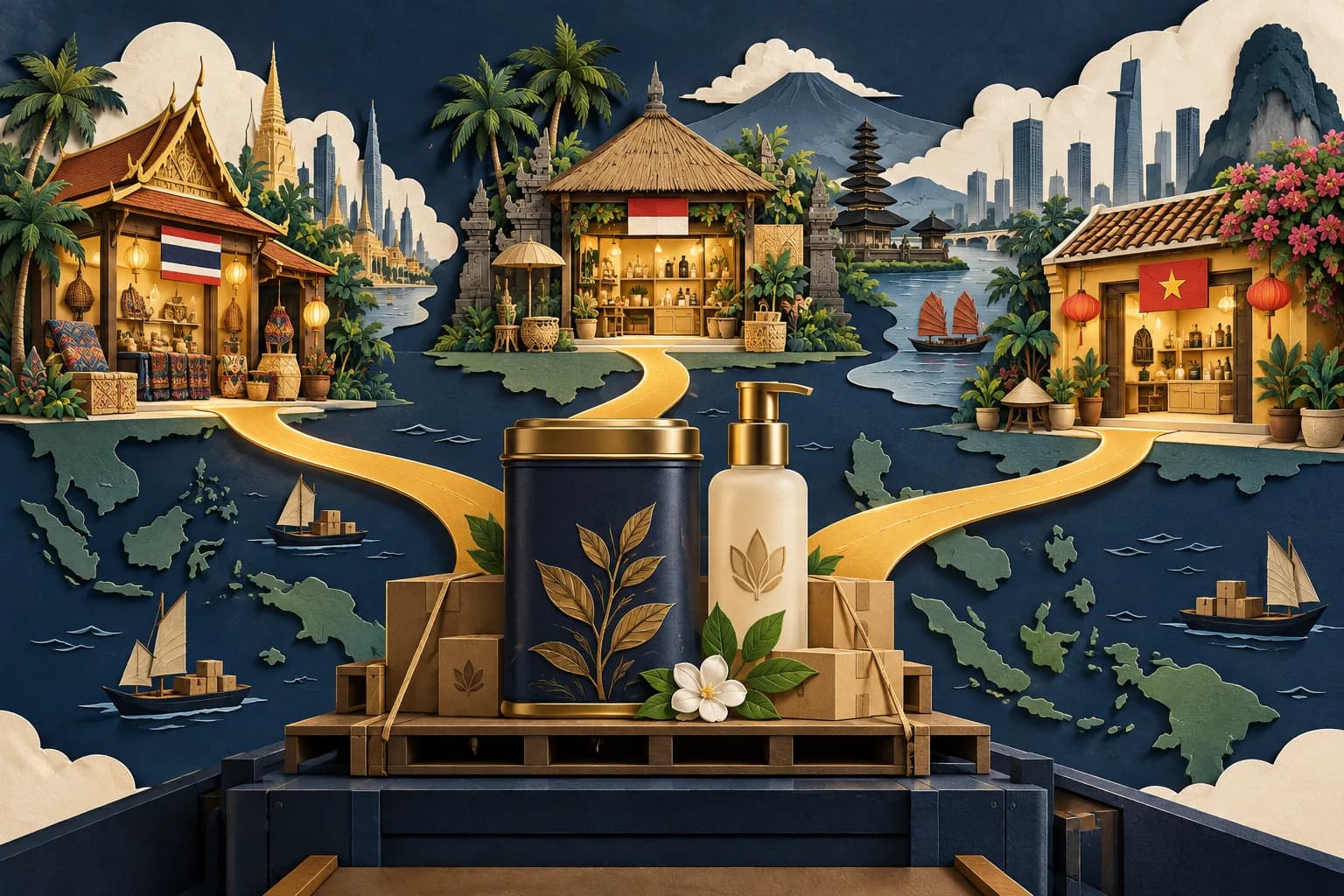
For a decade, ambitious Indian consumer brands looked west — to the US and the Gulf — for their first international market. Increasingly, the smart money is looking east instead. Southeast Asia has quietly become one of the most natural expansion markets for Indian brands, and marketplaces are the door in.
This is the strategic picture: why it's happening, what travels well, and how to enter. If you want the step-by-step mechanics of setting up, that's covered separately in how Indian brands can sell on Shopee and Lazada in Singapore. This piece is about the strategy behind the move.
Why Southeast Asia is the natural next market
Several forces line up in SEA's favour for an Indian brand:
- Scale and growth. Southeast Asia is one of the world's fastest-growing ecommerce regions — a large, young, mobile-first population that buys through marketplaces rather than standalone websites.
- Marketplace-led buying. Just like India, SEA commerce runs through platforms — Shopee, Lazada, and TikTok Shop — so the playbook is familiar: win on the marketplace, not on paid search to a DTC site.
- Similar consumer economics. Value-consciousness, price sensitivity, promotion-driven buying, and a taste for the kind of accessible-premium products many Indian brands do well. What resonates at home often resonates here.
- Proximity and familiarity. Overlapping tastes in beauty, wellness, food, and fashion, sizeable South Asian communities, and time zones that make operating far easier than the US.
- Room to grow. Categories that are saturated and brutally competitive in India can be earlier-stage and more winnable in specific SEA markets.
Categories that travel well
Not everything crosses the border equally. The Indian categories that tend to travel best into SEA marketplaces:
| Category | Why it travels |
|---|---|
| Beauty & skincare | Strong regional appetite, content-led discovery on TikTok Shop, and ingredient stories that cross borders. See our beauty playbook. |
| Health & supplements | High repeat-purchase and margin — subject to local compliance. See the supplements playbook. |
| Fashion & accessories | Value-driven, trend-led, and a natural fit for marketplace and live-selling formats. |
| Home & lifestyle | Practical, giftable products that perform well in campaigns and bundles. |
| F&B / specialty | Distinctive products with a story, where the diaspora provides an initial beachhead audience. |
The challenges nobody warns you about
SEA is not one market — it's five or six very different ones. The mistakes that trip up Indian brands are almost always operational:
- Treating SEA as a single market. Shopee dominates most countries, but platform mix, language, price expectations, and promotional calendars differ by market. What works in Singapore isn't a copy-paste for Vietnam.
- Compliance surprises. Category rules — especially for beauty, health, and food — differ from India's and from each other. A listing that's fine at home can be non-compliant on a SEA platform.
- Cross-border logistics. Fulfilment, duties, and delivery expectations vary; slow or unreliable shipping kills your ratings and, with them, your search ranking.
- Trust from zero. Your brand equity in India doesn't transfer automatically. On a new platform you start with no reviews and no ranking — and have to build both fast.
- Running it remotely. Managing SEA marketplaces from an office in India, in Indian business hours, without local platform relationships, is the most common reason entries stall.
The pattern we see: the brands that succeed treat SEA entry as an operational problem to be solved on the ground, not a listing exercise to be run from a distance.
You don't need a local entity to start
The biggest misconception is that entering SEA means incorporating a company, leasing a warehouse, and hiring a regional team before you've sold a single unit. You don't — at least not to start.
Brands can enter through an ecommerce enabler or partner that already holds official platform status and local operational capability. That lets you:
- Test real demand on Shopee, Lazada, and TikTok Shop before committing capital.
- Launch with compliant, localised listings and local customer service from day one.
- Access campaign slots and platform relationships you couldn't build cold from India.
- Validate which markets and categories actually work — then invest in local incorporation and infrastructure with evidence, not hope.
A staged path into the region
The lowest-risk entry sequence most brands follow:
- 1. Start in Singapore. English-speaking, high purchasing power, strong logistics, and a credibility base for the region. It's the natural first stop — see our Singapore market overview.
- 2. Expand into Malaysia. Culturally adjacent, large, and a logical second market once Singapore is proven.
- 3. Scale into volume markets. Vietnam, Thailand, and the Philippines offer far larger order volumes, each with its own platform dynamics and localisation needs.
At each stage you carry forward what worked and localise what didn't — rather than betting the whole region at once.
The bottom line
Southeast Asia is the natural next market for a generation of Indian consumer brands: familiar marketplace mechanics, similar consumer economics, and real room to grow. The barrier isn't demand — it's operating across six different markets, compliantly, with local relationships, without building it all from scratch. Solve that, and SEA becomes one of the most attractive expansion moves an Indian brand can make.
Atsell helps international brands — including those from India — enter and scale across Southeast Asia as an official partner of Shopee, Lazada, and TikTok Shop. See our India-to-SEA expansion support.