Paying Growth Prices for Maintenance Work?
Platform fees are up. Margins are tight. And the one channel cost you can actually control is probably still priced for a phase your brand left years ago.

The 20-second version: Shopee and Lazada keep raising their take rates — and you can't negotiate those. Your enabler fee is different. It's the one big channel cost you can renegotiate. Most established brands never do, so they keep paying a growth-stage fee for what is now maintenance work. Right-size it and you protect margin without touching service. Leave it, and you're taxing your own profit for a climb you already finished.
First, the part nobody wants to say out loud
Selling on Shopee and Lazada — and across the wider Singapore ecommerce market — costs more than it did 18 months ago. Both platforms have raised take rates, trimmed seller subsidies, and rolled out new fees that quietly thin your margin on every order. None of that is up for negotiation. When you sell on their rails, you pay their toll.
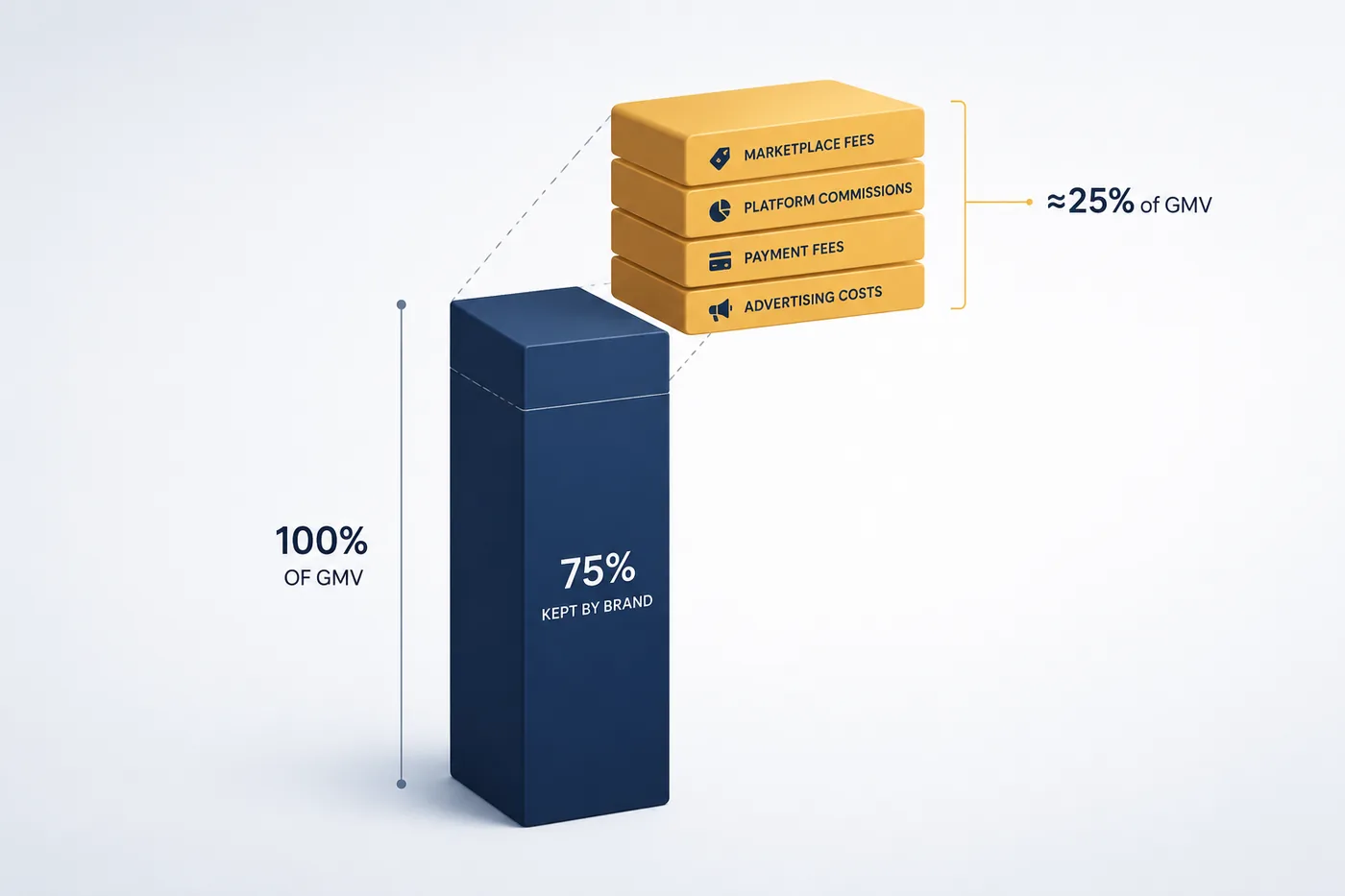
Stack the platform's cut on top of an enabler management fee, and total channel costs for a well-run flagship store can climb past 25% of GMV. A quarter of your top line — gone before product cost, before logistics, before you've made a cent.
Now add the mood. Consumer spending is subdued, and 45% of Singaporeans expect a global recession within six months (YouGov, 2025). This isn't the season for aggressive spend. It's the season to protect margin and run lean. The brands that win the next 18 months won't be the ones that spent the most. They'll be the ones that wasted the least.
You can't fight the platform. So fight the fee you can change.
Here's the uncomfortable math: of the costs eating your channel margin, almost all of them are fixed. Shopee's commission? Fixed. Lazada's transaction fee? Fixed. Shipping subsidies clawed back? Not your call.
There is one major line you can still move — your enabler fee. It's the lever hiding in plain sight. And for most established brands, it's set wrong.
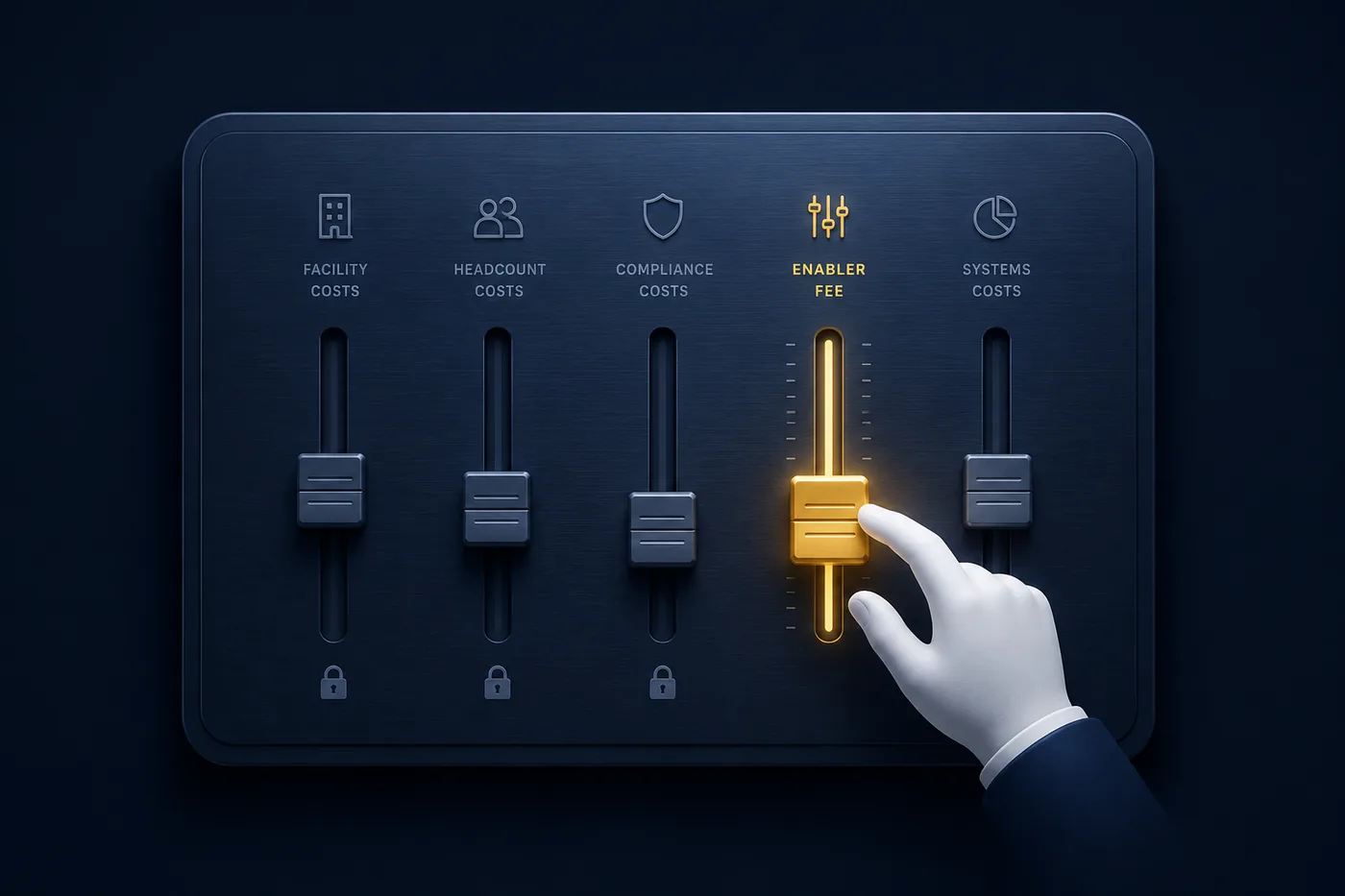
The reframe: When every other channel cost is rising and locked, right-sizing your enabler fee isn't penny-pinching. It's the single highest-leverage move available to protect your margin this year.
There are two jobs here. Most brands pay for both and only need one.
Every brand on Shopee or Lazada lives in one of two phases, and they are not the same job.
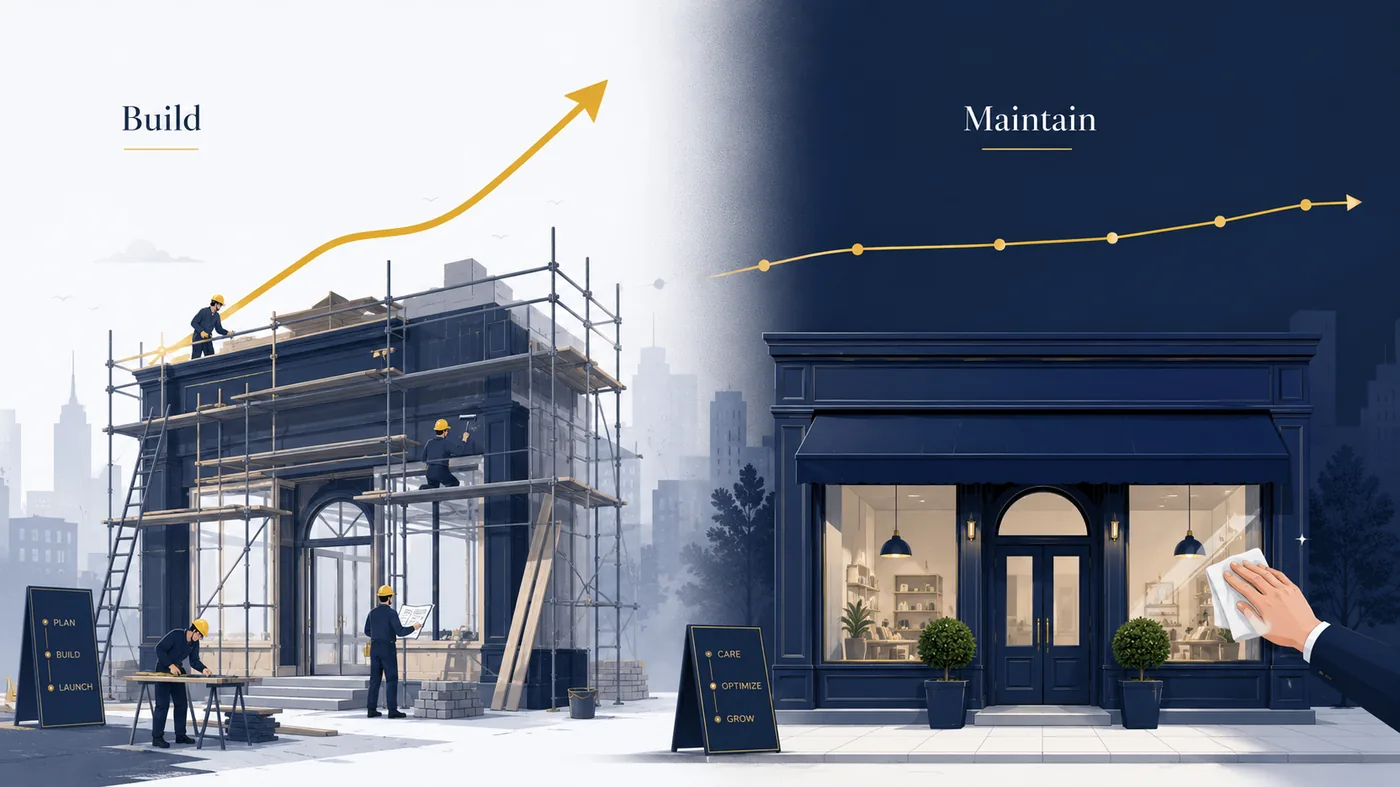
The build phase is creation. Store setup and architecture. Onboarding SKUs and producing content. Earning your first reviews. Fighting for Shopee Mall or LazMall Flagship status. Developing an audience from nothing. This phase is expensive because someone is manufacturing revenue that did not exist before — and it's worth every dollar, because the upside is enormous.
The maintain-and-grow phase is stewardship. Your stores are established. Your SKUs are live and stable. Your ratings, reviews, and customers already exist on platform. The work now is to run it well, protect the brand, and grow steadily — daily operations, customer service, campaign execution, content upkeep, clean reporting. The infrastructure is built. The job is to keep it humming.
Both deserve a skilled operator. Both are real work. But paying enterprise build-phase fees for a maintenance mandate is a structural mismatch — the scope has changed, and the fee hasn't caught up.
| Build phase | Maintain & grow phase |
|---|---|
| Store setup and architecture | Daily operations and listing health |
| SKU onboarding and content creation | Campaign planning and execution |
| Brand positioning on platform | Customer service and review quality |
| Audience development and following | Content maintenance |
| Aggressive growth investment | Monthly reporting and insights |
How the overpayment sneaks in
Enablers price one of two ways, and both are built for the build phase.
The first is revenue share — a slice of GMV, often 5–15%, sometimes on top of a base retainer. We've argued before, in our guide to enabler pricing in Singapore, that this is a good model during growth: it puts the enabler's skin in the game, so they only earn more when your sales climb.
The second is an enterprise retainer — a hefty fixed fee bundling a big team and aggressive targets, sized for a brand sprinting to scale.
Both get set once — at the start, in the build phase. Then nobody touches them. The brand matures, the work settles into maintenance, but the fee keeps charging like it's still day one. That's not malice. It's inertia. Set it and forget it — except the forgetting is what costs you.
The mechanism in one line: A revenue share charges a percentage of total sales. Once growth flattens, most of those sales are a baseline you already own — so you're paying, every month, on revenue your enabler is maintaining, not creating.
The maintenance tax, in real money
Picture an established home-and-living brand running two flagship stores across Shopee and Lazada. Live for three years. Growth settled into low single digits. The monthly work is genuine but routine — operations, customer service, listing upkeep, and the standard 9.9 / 11.11 / 12.12 campaign rhythm.
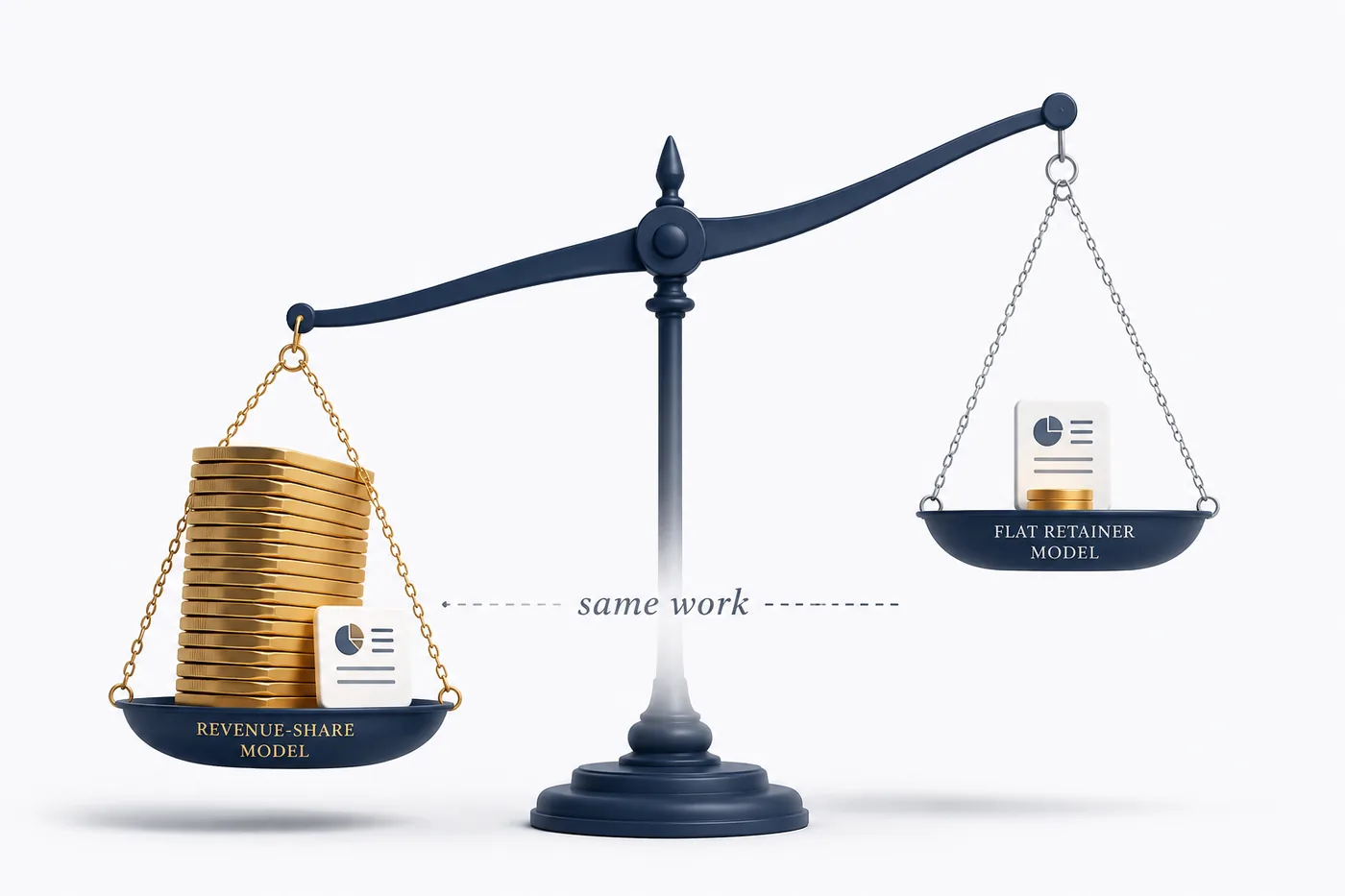
That's not a rounding error. That's a quarter of a million dollars a year — enough to fund a new product line, a year of paid media, or simply land on your bottom line where it belongs. For doing the exact same work.
The figures are illustrative, and a real quote turns on SKU count, platforms, and markets. But the shape holds across every mature account we've reviewed. Even on a gentler revenue share, the gap stays wide once growth flattens — because there's barely any incremental revenue left to share. You're mostly paying a percentage on a number you already hit.
"But isn't a flat fee a red flag?"
Fair challenge — we've made the opposite case ourselves. In our pricing guide, "no performance accountability" sits on the red-flags list, because a flat fee can mean an enabler with nothing to push for.
Here's the nuance that changes everything: that rule is for when you're hiring someone to grow. If your mandate is growth, demand skin in the game — a revenue share earns its keep. If your mandate is maintenance, you're not buying growth anymore. You're buying reliability, speed, and cost efficiency. Paying a growth incentive for a maintenance job doesn't buy you more growth. It just inflates the price of upkeep. Match the model to the mandate, and the "red flag" turns into the right answer.
To be clear — this isn't anti-growth
None of this means growth stops mattering. It's the opposite. We run aggressive, KPI-linked growth programmes for brands that want to scale — that's most of what we do, and when the mandate is growth, we actively want skin in the game tied to your results.
The flat, maintenance-priced model is built for a specific situation: established brands whose stores are already mature, whose priority is protecting margin and running lean, and who simply shouldn't be paying build-phase fees anymore. If you're still climbing, you want growth-shaped pricing — and we'll happily structure it that way. The point was never "cheaper is better." It's "pay for the phase you're actually in." Some brands are scaling. Some are stewarding. Smart ones know which they are — and price accordingly.
Are you in the maintenance phase? A 30-second check
You're likely there — and likely overpaying — if most of these ring true:
- Your stores have been live for more than a year.
- Your SKU range is stable; you're not launching big new catalogues.
- Your Shopee Mall / LazMall Flagship status is already secured.
- Year-on-year growth has flattened into a steady band.
- Your monthly report reads as steady operations, not new initiatives.
- The channel sits alongside showrooms, dealers, or resellers — one part of your mix, not your growth engine.
- Your fee, or your revenue-share percentage, has never once stepped down since you signed.
Tick most of those and the verdict is simple: you're paying for a phase you've already outgrown.
Growth pricing vs maintenance pricing, side by side
| Growth mandate | Maintenance mandate | |
|---|---|---|
| The job | Build GMV from a low base | Run an established operation well |
| Right model | Revenue share / KPI-linked fee | Flat retainer scoped to the work |
| What you're buying | Upside and aggression | Reliability, speed, lean cost |
| Fair to charge on | Incremental revenue created | Scope and work going forward |
| Biggest risk | An enabler with no skin in the game | Paying a % of a baseline you built |
Your move at renewal
Contract renewal is the one moment both sides expect the terms to be re-opened. Don't waste it. Five moves that put the margin back on your side:
- Name the phase out loud. Tell your enabler — or anyone you're evaluating — that this is a maintenance mandate on established stores, not a build. That single sentence reframes the entire quote.
- Ask for a flat, scope-based retainer. A fixed fee tied to defined deliverables: operations, customer service, campaigns, content upkeep, reporting. You should see exactly what you're paying for.
- Refuse revenue share on existing GMV. A take-over of mature stores is not a new build. Pay for the work ahead — not a cut of revenue someone else's contract generated.
- Protect continuity. Make sure flagship status, listings, and accounts transfer clean. A serious operator offers a transition window at no extra charge — and lets you mystery-shop their live stores before you sign a thing.
- Lock the rate. On a maintenance contract, a multi-year flat rate with no surprise hikes is a feature worth demanding.
The bottom line: Maturity isn't a problem to fix — it's a milestone most brands never reach. But it changes the job, and the job sets the price. Platform fees you can't control are already taking their cut. Don't hand over more than the work is worth on the one line you can. If your stores have grown up, your pricing should grow up with them.