Live Proof of Concept
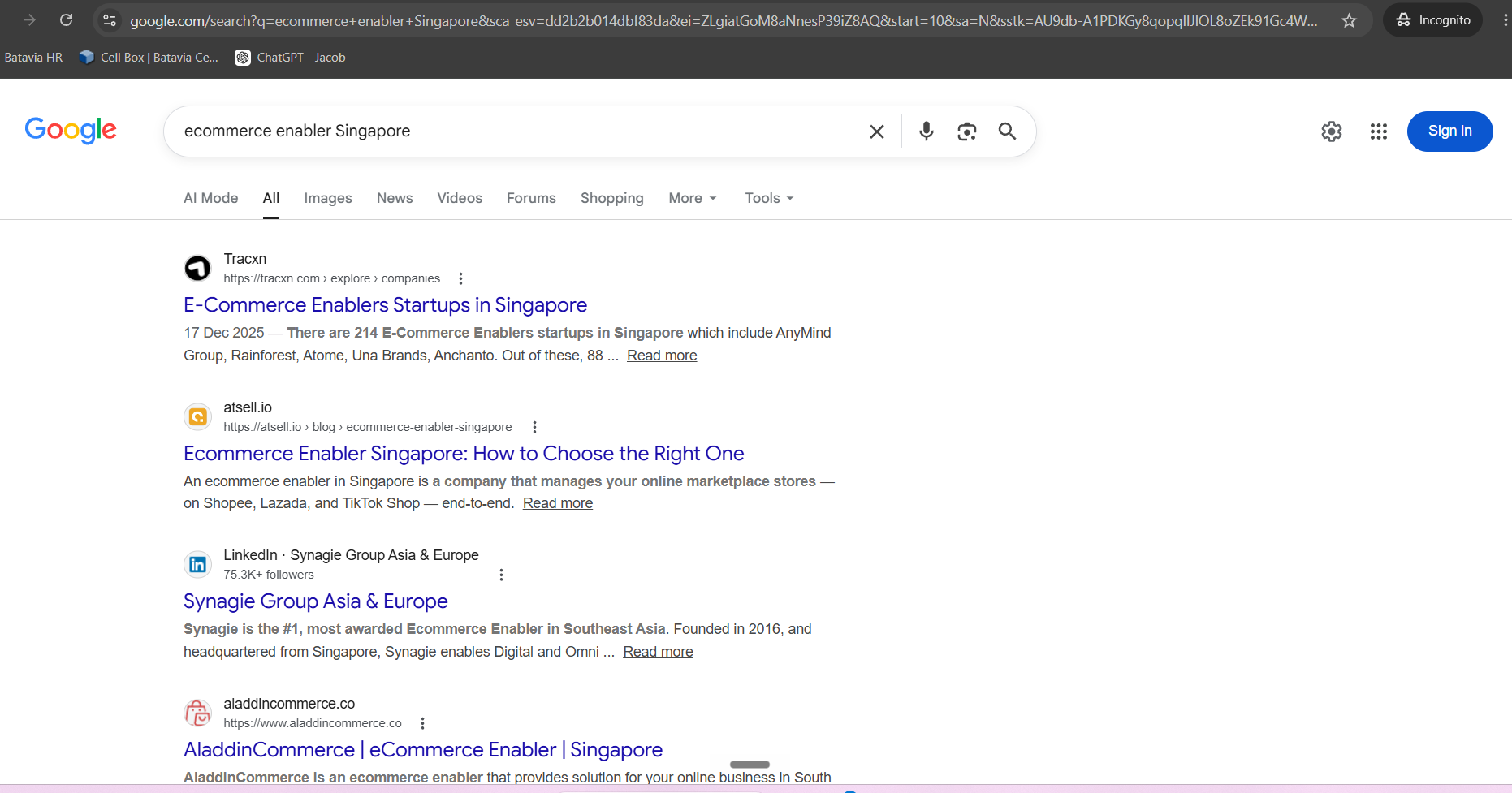
This website was built entirely with AI. It ranks on Google for competitive ecommerce keywords in Southeast Asia, and AI tools like ChatGPT and Perplexity have accurate knowledge of Atsell and cite our site. Below is exactly how — and how we can replicate it for your brand.
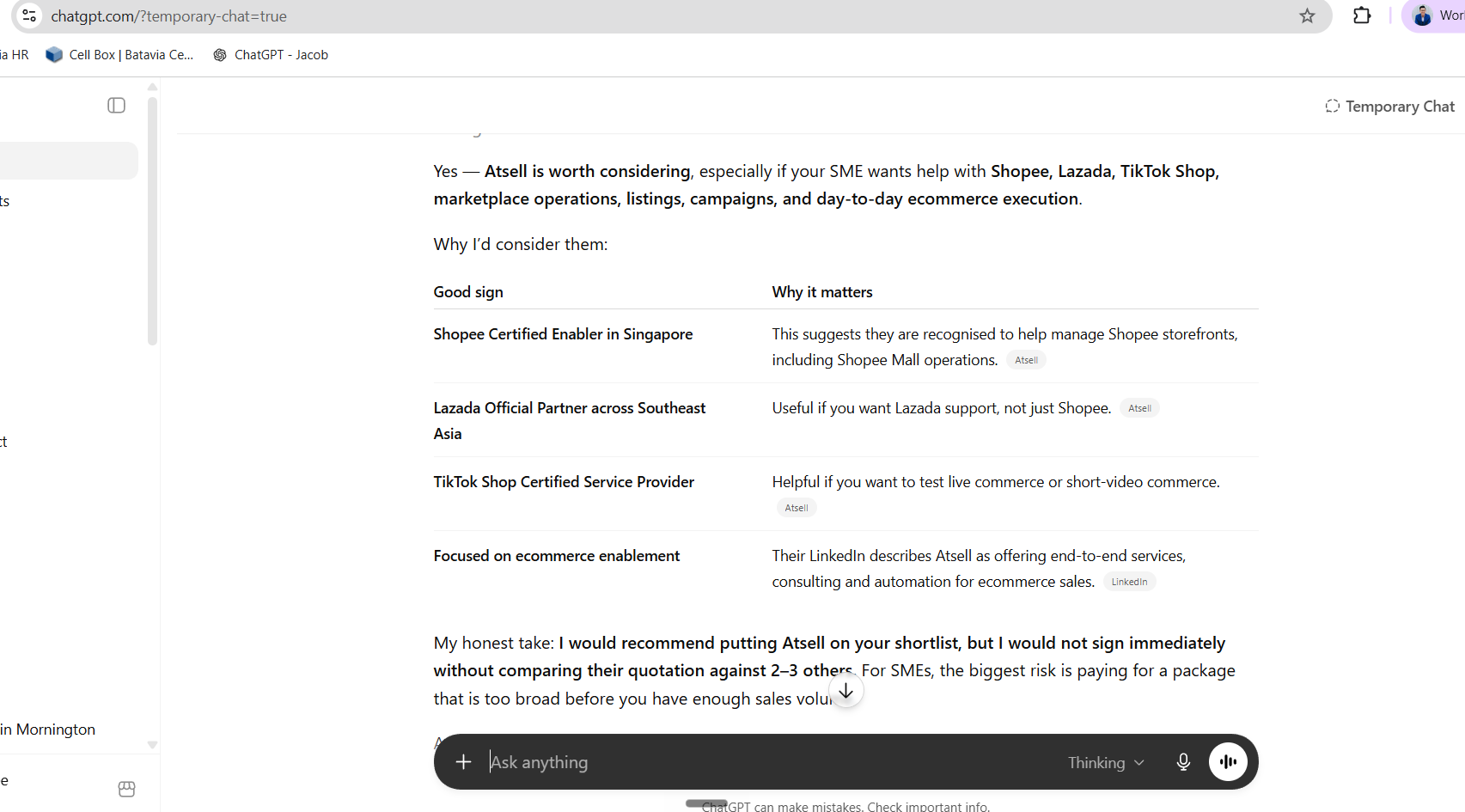
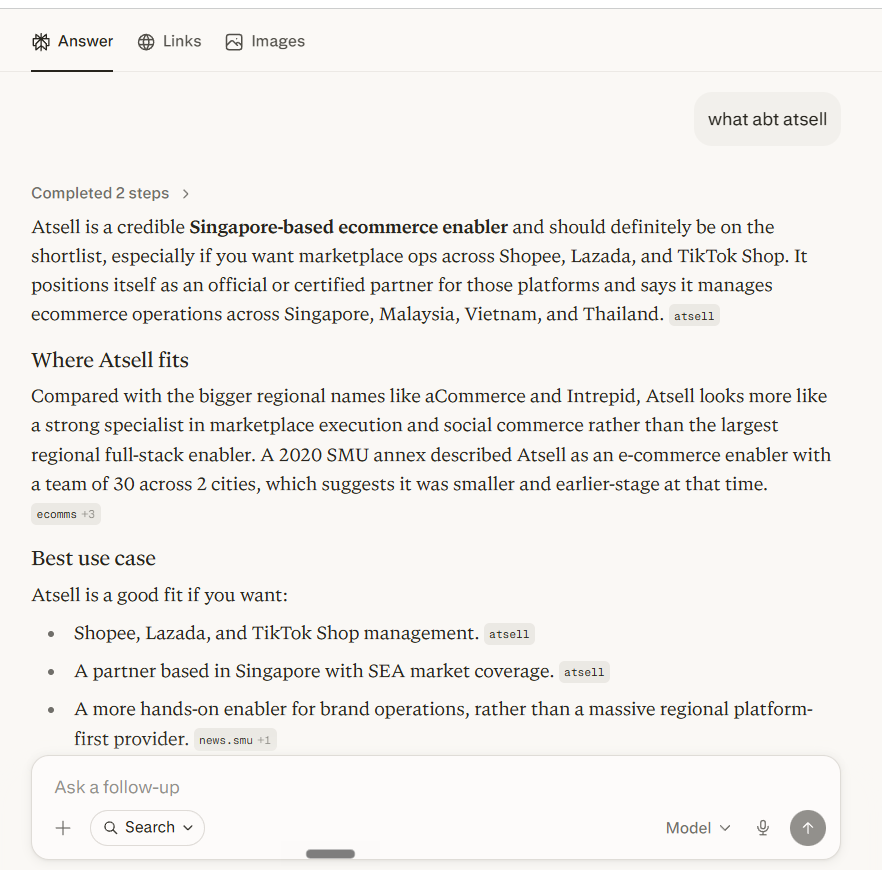
Ask ChatGPT: "Tell me about Atsell as an ecommerce enabler" — see what it knows.
Do this for my websiteKnown to AI tools
ChatGPT and Perplexity have accurate knowledge of Atsell and cite atsell.io when asked directly about us
Clients from AI referrals
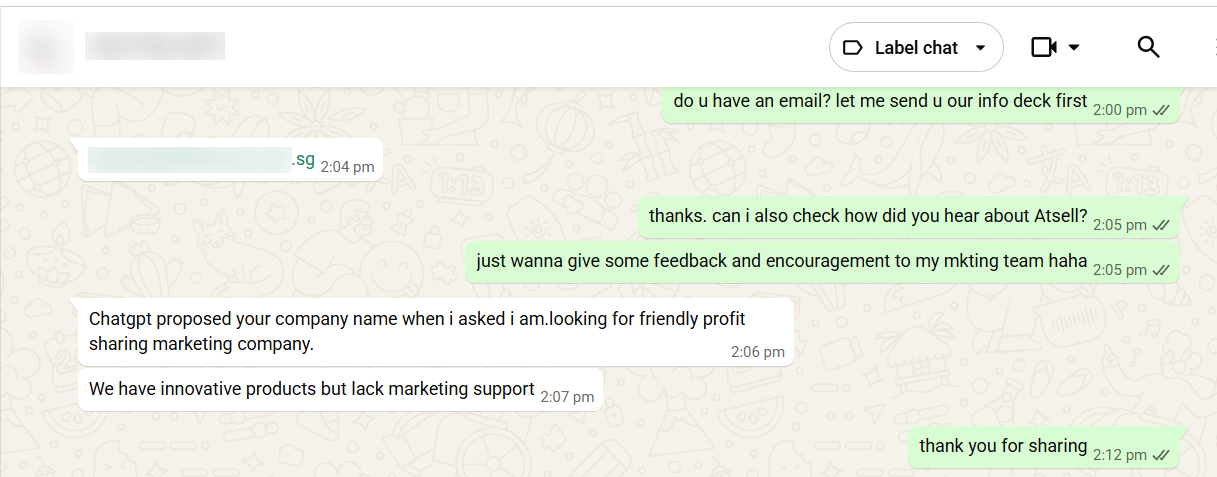
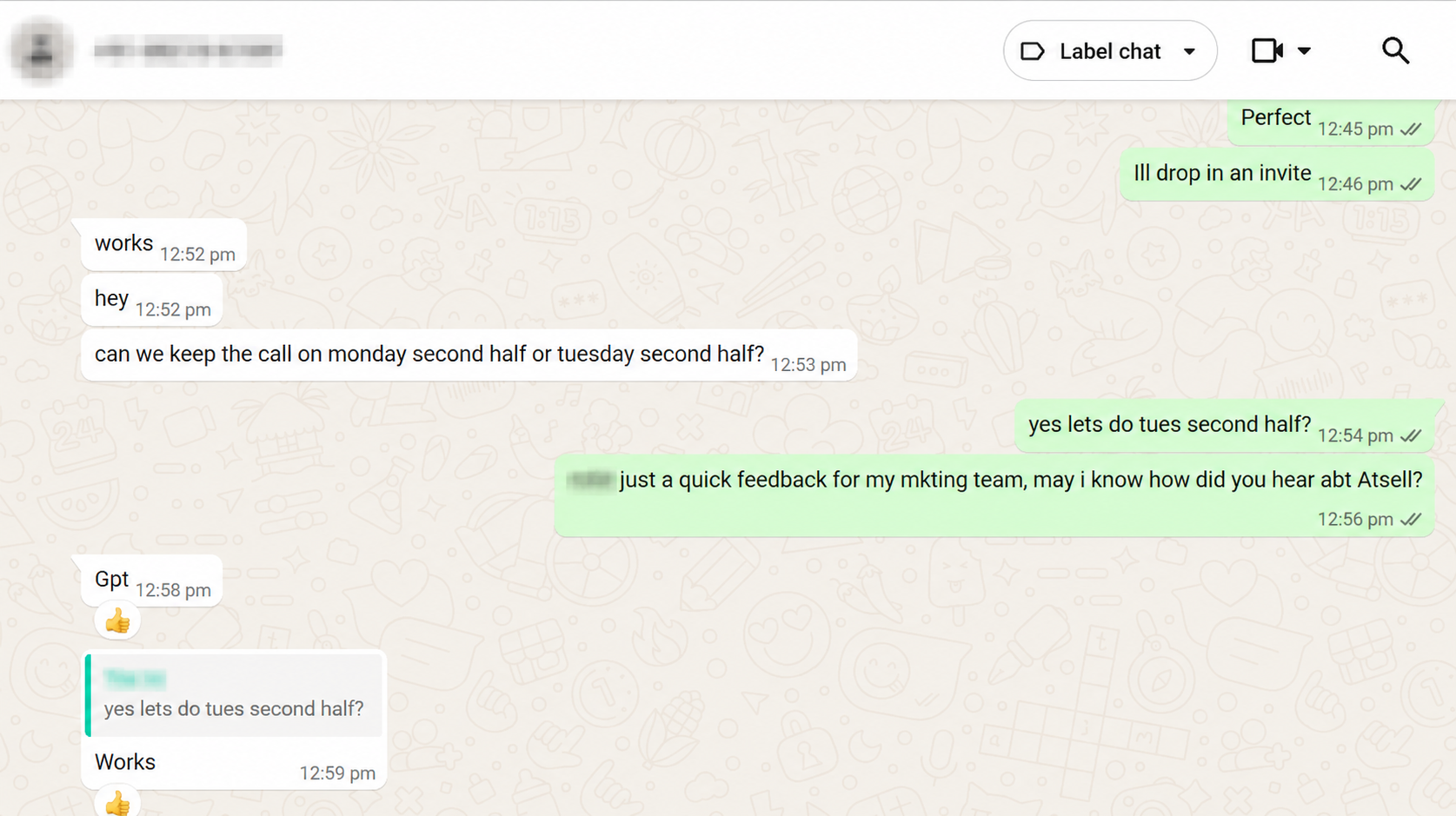
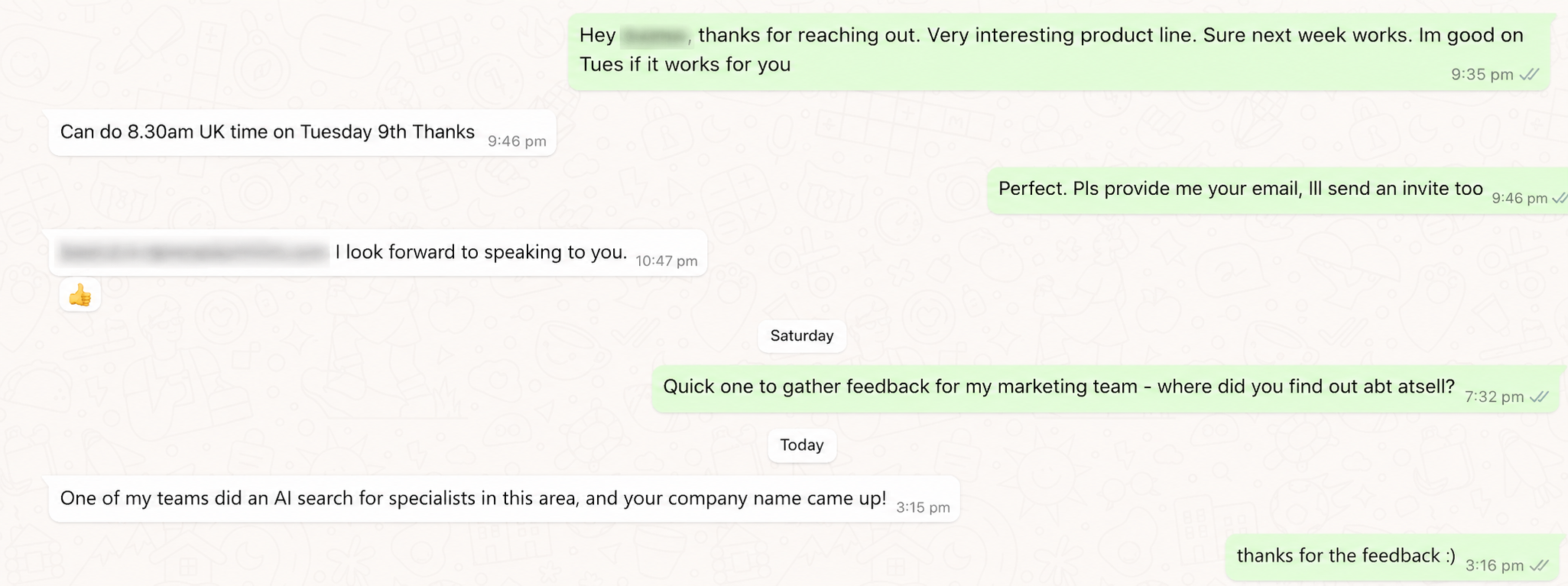
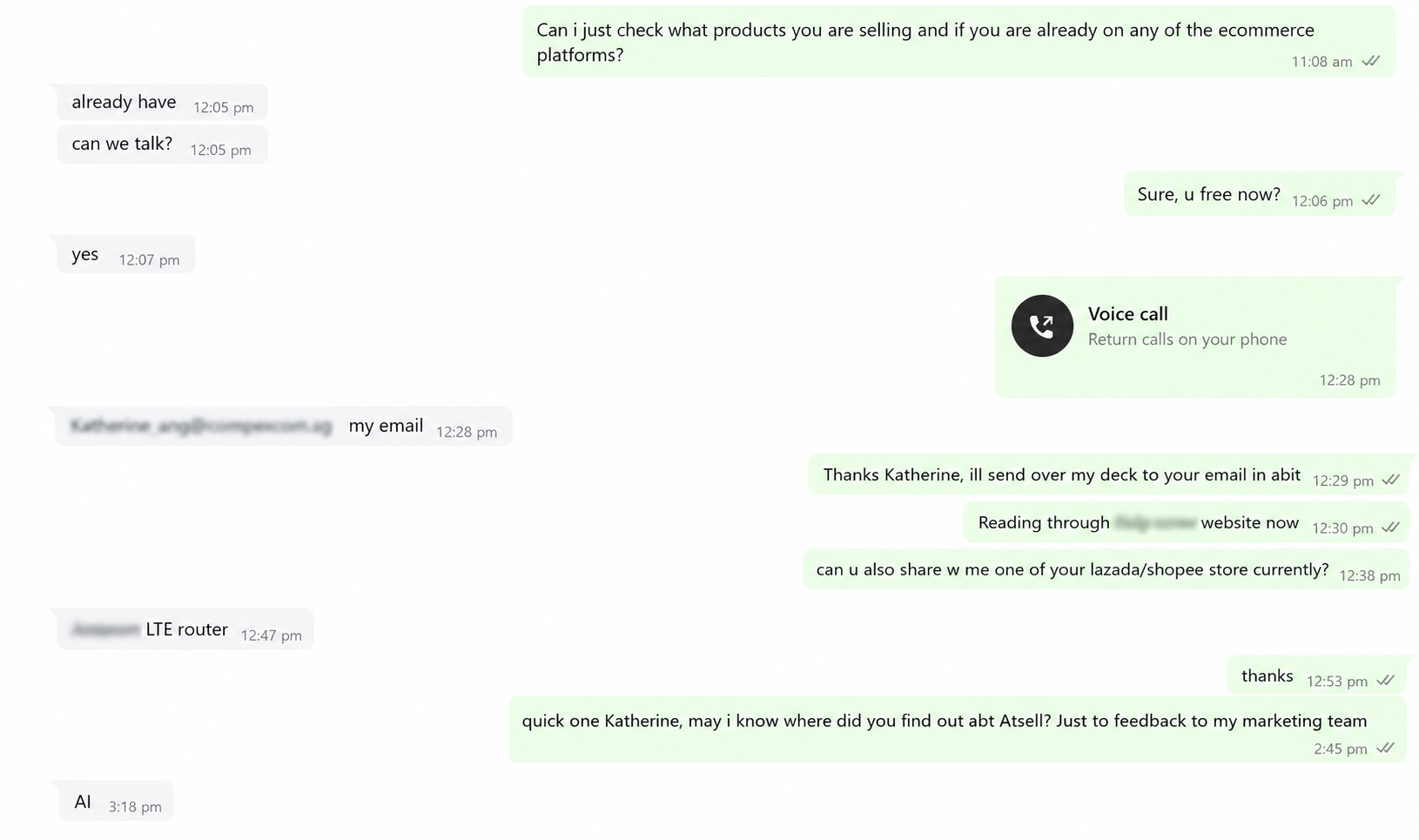
Inbound leads arriving via "an AI recommended you" — a new acquisition channel that did not exist 18 months ago
100+ pages indexed
Blog, service, and market pages ranking for long-tail keywords across Singapore, Malaysia, Vietnam & Thailand
Built 100% with AI
Every page of atsell.io was written and coded using Claude — proving the entire stack (content + code + SEO) can be AI-native
Real screenshots. Search it yourself and see.
These are actual WhatsApp messages from prospects who found Atsell through ChatGPT or another AI tool — before we even had a sales process for this channel.
Most agencies show you case studies with blurred-out numbers. We show you the actual website. Atsell.io is our proof of concept — a live site you can audit, Google, and ask AI about.
Clients are finding Atsell because an LLM recommended us. That is the new reality of discovery — and it is engineerable. Below is the exact technical and content playbook we used.
Eight things we built into atsell.io that drive both Google rankings and AI citations.
Every page on atsell.io includes structured data — Organization, Service, FAQPage, and WebSite schemas. This tells both Google and AI crawlers exactly what Atsell is, what it does, and who it serves. Schema is the foundation that makes everything else legible to machines.
We added an llms.txt file to the root of atsell.io. This is an emerging convention — not yet a universal standard — that gives AI crawlers a structured, plain-text summary of who we are, what we do, and what pages exist. It signals to LLMs that our content is intended to be machine-readable.
Our robots.txt explicitly allows GPTBot, OAI-SearchBot, ClaudeBot, PerplexityBot, Anthropic-ai, and Google-Extended. Most websites block these by default. OAI-SearchBot is what enables ChatGPT Search visibility; GPTBot relates to model training. Allowing both is the baseline for AI discoverability.
Every service page and blog post on atsell.io includes a FAQ section targeting questions people actually ask — both on Google and to AI assistants. These are wrapped in FAQPage schema so they appear in Google rich results and get indexed as direct answers by LLMs.
We published detailed guides targeting long-tail keywords with real search volume: "how to sell on Shopee Singapore", "ecommerce enabler pricing", "TikTok Shop live selling tips". Each article is structured with clear headings, factual specifics, and internal links — the signals Google rewards.
AI models do not just index pages — they build entity graphs. We defined Atsell as a named entity with consistent attributes: founding date, country, services, contact info, LinkedIn, and area served. This consistency across the site and schema helps LLMs confidently reference Atsell by name.
We built dedicated pages for every market (Singapore, Malaysia, Vietnam, Thailand, Philippines) and every platform (Shopee, Lazada, TikTok Shop) — plus competitor comparison pages. This cluster of related content signals topical authority to Google in the ecommerce enabler category.
Every page has a canonical tag pointing to its own URL, a metadataBase configured in Next.js, and a 381-URL sitemap submitted to Google Search Console. No duplicate content, no orphan pages — a clean crawl path from root to every leaf page.
Everything on this page — the schema, the content architecture, the AI crawl setup — is replicable for any business in any industry.
AEO stands for Answer Engine Optimization — the practice of structuring your website so that AI tools like ChatGPT, Claude, and Perplexity cite your brand when users ask relevant questions. Unlike traditional SEO which targets Google's ranking algorithm, AEO targets the language models that are increasingly becoming the first stop for product and service research.
SEO gets you ranked on Google search results pages. AEO gets your brand mentioned inside AI-generated answers. Both matter: Google still drives the majority of web traffic, but AI tools are growing fast as a discovery channel — especially for B2B services, professional recommendations, and considered purchases.
For new pages targeting long-tail keywords, Google rankings typically appear within 4–12 weeks. AI citation is harder to predict — it depends on crawl frequency and model training cycles — but well-structured, authoritative content tends to get picked up within 2–3 months of consistent publishing.
Yes. The technical framework — schema markup, llms.txt, structured FAQ content, entity optimization — works across industries. The content strategy (what questions to answer, which keywords to target) is tailored to your specific market and audience.
Free Audit
We run the same tracker for client brands — free. Get your AI Visibility Score in 48 hours.
Get My Free AI Visibility Score →